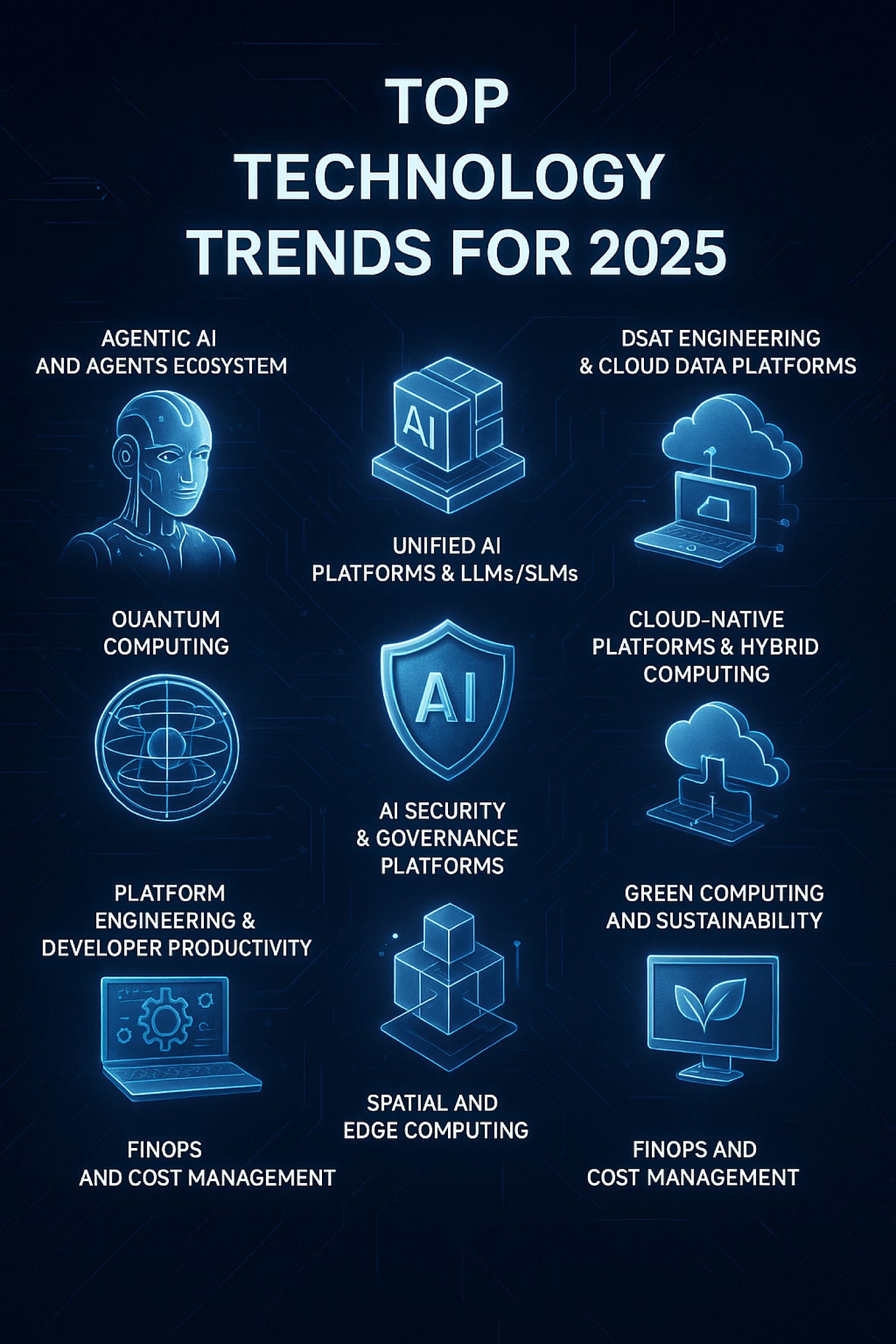
The speed of digital revolution has not slowed down. From the way businesses operate and how people interact with those around them technology is constantly transforming all aspects of modern life. Certain of these changes are in the making for a long time and are now hitting critical mass, while others have taken off quickly and shocked entire industries. Whether you work in tech or are simply living in a global society increasingly influenced by it being aware of where technology is moving will give you a real edge. Here are the top 10 digital technology trends that are the most significant going into 2026/27 and beyond.
1. Artificial Intelligence moves from tool To TeammateAI has evolved from being an unpretentious or productivity shortcut into something much more integrated. In all industries, AI systems are now active, collaborative rather than inactive assistants. For software development, AI is able to write and review code together with engineers. In healthcare, AI flags symptoms that human eyes might overlook. In the areas of marketing, production of content and legal services, AI will handle the first drafts and analysis routinely so the human experts can concentrate at higher-order thought. The change is less about replacement, and more about changing the way that human work is when the repetitive layer is processed automatically.
2. The Rise Of Agentic AI SystemsA step above standard AI assistants Agentic AI is a term used to describe machines that are capable of planning and executing multi-step tasks autonomously. Rather than responding to a single prompt their systems break down complicated goals, choose a course of action, draw on various tools and data sources, and follow in the direction of a human without constant input. Business-related, this is AI that manage workflows and research, create messages and update systems in a manner that requires minimal supervision. To everyday users, this refers to digital assistants which actually are able to complete tasks rather just answering questions.
3. Quantum Computing Enters Practical TerritoryQuantum computing has been still in the realm of speculation. But that is changing. While universal quantum computers remain still in the process of being developed, specialised systems are beginning to prove their worth for drug discovery, materials science, logistics, and financial modelling. Major technology companies and national governments are speeding up investment into quantum-related infrastructure. The race to achieve meaningful commercial advantage has been growing. Companies that are keeping an eye on this are in better position when the technology becomes mature.
4. Spatial Computing And Mixed Reality Expand Their FootprintIn the wake of the commercial launch of top-of-the-line mixed reality headsets spatial computing is discovering practical use cases well beyond entertainment and gaming. Architecture firms are using it to perform immersive design reviews. Surgeons practice complicated procedures in virtual environments. Remote teams meet in virtual spaces that are shared in three dimensions. When hardware becomes lighter and more affordable, spatial computing is expected to become a common method for how digital data is utilized in a variety of ways, as well as acted upon both in professional and daily contexts.
5. Edge Computing Brings Processing Closer to the sourceCloud computing has changed the way things are possible due to centralizing processing power. Edge computing is now decentralising the process again, and for good reason. Through processing the data close to where it is generated, whether at a factory floor, in a hospital ward, or inside the vehicle's connected system edge computing can reduce the amount of latency, increases reliability, and cuts the bandwidth demands for constant cloud communication. For applications in which real-time response is non-negotiable, from autonomous vehicles to industrial automation to smart city infrastructure, edge is becoming essential.
6. The Cybersecurity field develops into a constant DisciplineThe threat scene has become increasingly fast and is too complex for the previous model of routine checks and reactive patching. The threat landscape will change in 2026/27 when serious organizations take cybersecurity as a constant corporate discipline, rather than an IT department concern. Zero-trust systems, that assume neither system nor user are trustworthy in default, is becoming a standard procedure. AI-driven tools monitor networks in live time, finding anomalies before they can become threats. Humans are the most frequently exploited right here vulnerability which makes security training and culture equally important as any technological solution.
7. Hyperautomation Joins The Dots Between SystemsHyperautomation employs a combination of AI machines, machine learning and robotic process automation to detect the workflows that need to be automated rather than individual tasks. Contrary to conventional automation, it examines the interconnected tissue between systems which previously required human co-ordination and removes that obstacles completely. The banking and insurance industries towards supply chain control and public services are noticing that hyperautomation is not only able to cut costs but fundamentally changes how an organization is capable of doing at a fast pace.
8. Green Tech And Sustainable Digital InfrastructureThe environmental impact for digital infrastructure is undergoing increased investigation. Data centers use huge amounts of electricity. The rise of AI training-related workloads has pushed that usage to be significantly higher. As a result, the industry invests in efficient equipment, renewable powered facilities, chilling systems using liquids and more efficient methods of managing workloads. For companies that have ESG commitments their carbon footprint from their IT stacks now a problem that cannot be ignored in the background.
9. The Democratisation Of Software DevelopmentAI-powered platforms that do not require code or programming have put software development within reach of people with no prior knowledge of programming. Natural user interfaces and visual development environments allow domain experts to create functional apps and automate complicated processes as well as integrate data systems and processes without having to rely on developers from outside. The pool of people skilled at creating digital solutions is rapidly expanding, and the effects on business agility and innovations are immense.
10. Digital Identity And Data Sovereignty The Future of Data Sovereignty and Digital IdentityWith the increasing use of technology, questions of who owns personal information and how identities are copyright are now more important than minor concerns. Privacy-preserving identity frameworks that are decentralised, privacy-enhancing technology, and enhanced rights to portability of data are expanding. In both the public and private sectors, they are pushing for models that give users actual control over their online identities as well as a better understanding of the ways in which their data is utilized. The direction is set, although the exact route isn't clear.
The trends discussed above are not an isolated phenomenon. They feed into and speed up each other leading to a digital era that is evolving faster than ever before in the past. In the present, staying informed is not just a matter of technologists. In a world this thoroughly shaped by digital forces, it's becoming increasingly relevant for all. For additional detail, check out a few of these trusted and get expert reporting.
{Ten Startup And Entrepreneurship Developments Fuelling Economic Growth In 2026/27
Entrepreneurship is always an expression of the time it is in, and shaped by technological advances, economic conditions, cultural attitudes toward risk and the problems that need to be addressed. The future of the startup industry in 2026/27 is being defined through a distinct mix of forces. They include powerful new tools that dramatically cut the cost of establishing a business, a maturing global finance system, and an array of huge problems in climate, health and infrastructure that have attracted the attention of entrepreneurs. Here are ten of the startup and entrepreneurship-related trends that are driving global growth heading into 2026/27.
1. AI is a significant reduction in the cost Of Starting A CompanyThe challenge of constructing functioning products has fallen significantly. AI software now handles significant portions of software design, designing, marketing copy, customer service, and financial modeling that used to require significant capital or a significant founding team. A small group with limited resources can now build a viable prototype, create a marketing presence and begin acquiring customers in just a fraction of the time it took five years back. This is producing a wave of smaller, faster-moving businesses and accelerating competition virtually every field but also offering entrepreneurship to more diverse group of people.
2. The Solo Founder And Micro-Startups RiseAs closely as the artificial intelligence-driven reduction in startup expenses is the growth of the solo founder and the micro-startups, small businesses managed by 1 or 2 people who would have required at least ten people decade earlier. AI manages customer service, produces content, creates code, and manages routine business operations with a single founder who focuses on relationships, strategy, and the direction of the product. Some of the fastest-growing new firms in 2026/27 are astonishingly efficient, and are producing meaningful revenues without the huge headcounts that have traditionally been ascribed to scale. The idea that a startup should to look like is being rewritten.
3. Climate Tech Attracts Record Entrepreneurial AttentionThe nexus of urgent planetary necessity and substantial available capital has led to climate technology becoming one of the fastest-growing areas of startup activity globally. Energy storage, green hydrogen green agriculture, sustainable agriculture capture, climate adaptation infrastructure, as well as the software systems required to help manage the energy transition are all attracting founders and investors in huge quantities. States that back the sector via commitments to buy and policy support are reducing the risk of early-stage investments in methods that are making climate tech more attractive compared to other categories of deep technology. The perception that this is where genuinely important problems are being addressed draws the best talent, as well as capital.
4. Emerging Markets Inspire More Globally Prominent StartupsEntrepreneurship's geography is changing. Startup environments in Southeast Asia, Latin America, Africa, and South Asia have developed significantly creating companies which are not simply local adaptions of Western models but genuine responses to the specific conditions for their marketplaces. Fintech that caters to people who are not banked, agritech dealing with food security, and healthtech making infrastructure where traditional ones do not exist have all spawned enterprises of significant size. International investors who before had their eyes upon Silicon Valley, London, and a few other renowned hubs are increasingly interested in the growth happening at Nairobi, Lagos, Jakarta, and Bogota.
5. Vertical AI Startups Find a Product-Market Fit that is StrongThe initial surge of AI excitement has resulted in a large number of tools that compete with each other on the basis of broadly similar capabilities. The best chance for longevity is turning out to be vertical AI firms that build highly specialized AI applications specifically for certain sectors or workflows. Legal document analysis for medical imaging interpretation, monitoring of construction sites and automation of financial compliance and optimization of agricultural yields are all areas where AI applications that are based on domain-specific research and tailored to the specific needs of a specific user are finding strong product-market match and genuine defensibility compared to the larger generalist competition.
6. The Revenue-Based Financing Program is a viable alternative to Venture CapitalNot every startup is suited by the venture-capital model, as it requires fast growth and a potential exit. Revenue-based funding, where investors provide capital in exchange to a certain percentage of future revenue instead of equity has seen significant growth in popularity as an alternative financing method. It's ideally suited to profitable, growing businesses that don't need or want the pressure and dilution associated with traditional VC. The development of this model is part of a broader diversification of the financing landscape that is making an entrepreneurial model viable for a broad variety of business models and the profiles of founders.
7. Community-Led Growth Replaces Traditional MarketingThe financial aspects of paid customer acquisition have become more difficult because the cost of advertising on the internet has been rising and the trust of consumers in traditional advertising has been diminished. The most effective growth strategy to attract a larger number of startups by 2026/27 is to build authentic communities around their products, transforming early users to advocates, contributors as well as distribution channels. Community-led growth requires a different kind of investment, in content, relationships, and the determination to create something that people truly want to be a part of. But it will result in customer loyalty and organic purchase that paid channels have a hard time to duplicate.
8. Wellness And Longevity Tech Attracts Serious CapitalInterest in prolonging the longevity of healthy people has moved from being a fringe of Silicon Valley obsession into a legitimate and rapidly expanding category of activity for startups. The advancements in biology research, diagnosis, personalised medicine and the technological infrastructure for monitoring and intervening in the ageing process are all attracting substantial funding. Health startups that offer personalised nutritional advice, hormone optimization as well as preventative diagnostics and cognitive performance tools are reaching significant and growing markets with populations who are willing in their long-term health outcomes.
9. Regulatory Technology Grows As Compliance Complexity BoostsThe regulatory environment facing businesses across healthcare, financial and other services and environmental reporting, and employment is growing more complicated in most major markets. This is driving the demand for technology that can help organizations meet their compliance obligations effectively. Regtech startups creating tools for automated reports, real-time monitoring of regulations, risk management, and audit trail generation are growing rapidly and frequently work in tandem with the regulators themselves to shape what compliant solutions are. Compliance burden, often viewed in isolation as a expense, is increasingly a driver of legitimate product growth.
10. Entrepreneurship with a purpose attracts the top TalentThe most able people entering the workforce in 2026/27 have more options than the previous generation and a growing percentage of them choose to work on problems they believe are significant rather than simply optimizing the compensation. Startups that address the most pressing issues in education, health and climate, financial inclusion, and infrastructure are consistently superior to commercial businesses seeking top talent when they deliver mission alignment and competitive conditions. Founding leaders who can articulate the compelling reasons why the company is not just about its financial benefits are finding this to be more than an expression of values, but an actual retention and recruitment advantage.
The startup landscape of 2026/27 is more diverse geographically, more accessible, and focused on solving actual problems than at past times in the development of the entrepreneur. The tools available to founders are never more effective and the financial resources available for advancing ambitious ideas, while being more selective than during the peak of the era of cheap money, is still substantial. Anyone with a real issue to address and the determination to find a solution for it, the conditions are as favourable as they have ever been.|Top 10 Travel Trends Changing How The World Explores In 2026/27
It has always been something more than just a move from one place to another. It is a reflection of how people view themselves and what they are looking for, and what they are looking to find beyond the boundaries of the everyday. The global travel landscape of 2026/27 is formed by a fascinating struggle between the desire for genuine adventure and the pressures of excessive tourism, between the convenience of technology and a desire for a truly human experience as well as the growing awareness of travel's environmental footprint and the constant desire to go an adventure that is new. Here are the ten trending travel ideas that will redefine how the world explores heading into 2026/27.
1. Slow travel gains ground Against The Highlight ReelThe idea of packing as many places as you can into a short trip, optimised for social media content and not real experience is losing ground to a completely different strategy. Slow travel, which involves spending more time in fewer locations, renting accommodation rather than staying in hotels and shopping locally, as well as engaging with a location in a way that creates something that is more like a real sense of familiarity is becoming more appealing to those who have watched the highlight reel and found it lacking. The change is part of a wider assessment of what travelling is actually about as well as what it is that makes it worth taking the time and effort involved.
2. In the wake of overtourism, there is a need to reconsider The Most Popular DestinationsAn increasing number of most visited places in the world are taking measures to control visitors' numbers after years of excessive tourist growth that has pushed infrastructure along with ecosystems and local communities to the brink of collapse. Entry fees, visitor cap, restricted access to sensitive sites, as well as increased costs designed to reduce volume while increasing revenue per visitor are becoming more frequent. Travelers will have to deal with more planning, more advance time and, in certain cases, the need to rethink which destinations are worth visiting. This is also generating renewed interest in alternative destinations that provide similar experiences but without the crowds.
3. Sustainable Travel Moves From Niche To ExpectationThe awareness about the environmental impact that travel has on the environment, particularly aviation has grown dramatically and is beginning to change the way people behave in tangible ways. The public is increasingly looking for more sustainable transport options, hotels with genuine sustainability credentials, as well as itineraries that positively contribute to the areas they visit rather than simply extracting experience from them. Demand for sustainable, authentic travel options is growing rapidly enough that greenwashing, always widespread in this market, is facing greater scrutiny. The operators who demonstrate genuine environmental and social ethical responsibility are discovering it to be more and more effective as a differentiator.
4. Technology Revolutionizes Travel Experience From End To EndThe tools range from AI-powered trip planners which design customized itineraries based on individual preferences as well as seamless crossing of borders, real-time translating, and accommodation platforms which connect travellers to adventures that go beyond the traditional hotel rooms, technology is transforming every step of travel. The friction that was once a part of international travel, the lines and the paperwork barriers to communication, and the information gaps, is being decreased in a systematic manner. If you're an experienced traveler it means more time for the experience. for those who've never been before or prior to this had a difficult time traveling internationally This is the process of removing the barriers that stopped them from attempting.
5. Wellness Travel Becomes A Major IndustryWellness has become one of the fastest-growing areas of the travel industry. There is a growing trend of building trips around experiences designed to improve physical and mental health instead of focusing on wellbeing as a bonus to relaxing vacation. Affiliated wellness retreats, spas or digital detox programs sleep-focused retreats, and routes centered around hiking mindfulness, and yoga have all been growing rapidly. The post-pandemic reassessment on priorities has made the investment in health and rejuvenation not only acceptable, but aspirational to a vast and expanding segment of tourists.
6. Culinary Tourism Becomes The Primary MotivationFood is a fundamental part of the travel experience, however for a growing proportion of travellers, it's now the main motive rather than an unintentional side effect. Destinations are now being picked specifically for their culinary traditions and restaurants, markets, and the chance to master cooking techniques that cannot be duplicated at home. Food tourism covers every budget and level, from food trail trails that run through Southeast Asia to reservation-only tasting menus at renowned restaurants. The worldwide impact of food-related media and the communities that have grown around it have produced the world's largest and most engaged population for whom dining well isn't only a pleasurable experience however, it's a true act of cultural exploration.
7. Solo Travel Continues its Significant RisingSolo travel, specifically among women, is one of the most stable growth trends in the field. Greater knowledge, stronger travelers community, enhanced safety infrastructure in many places, and a shift to believing that solo travel is empowering and not as a baffling experience are all contributing to. The hotel industry has responded with more solo-friendly options and options, from hostels for social gatherings specifically for adult travelers as well as boutique hotels offering solo-room rates. Travel operators have stepped up small-group departures designed specifically for single travelers looking for company with no commitment to travel in a group with a fixed partner.
8. The Return of Expeditionary TravelAt the other side of the spectrum, from the weekend city break there is increasing interest in more challenging, extended travel. Overland and longer-distance hiking systems and expedition-style traveling that require a great deal of preparation and effort are attracting tourists who want trips that completely differ from normal life instead of simply extending it to new location. Flexible work from home allows for longer trips to be achievable for those neither in retirement nor are they between jobs. The desire to take on an extremely significant journey which demands preparation, perseverance, and results in transformation, rather than simply memories, is getting more people to share the experience.
9. Space And Extreme Destination Tourism Edges Toward RealitySpace tourism is still the restricted to the extremely wealthy, but the trend will be towards wider accessibility over time. This excitement is now generating a genuine interest in what travel at its most extreme boundaries looks like. As of now, extreme location tourism, such as Antarctica deep ocean habitats, active volcanic sites, and the most remote places on Earth is growing as the advancement of technology and specialized operators have made previously unattainable travel feasible. The appetite for experiences that are truly exceptional in a culture where places are easily accessible and mapped has sparked interest in the frontiers of what travelling can mean.
10. Traveling becomes a vehicle for Meaningful ContributionVoluntourism has a turbulent track record, with well thought-out projects sometimes causing more harm that good. A more sophisticated version is emerging where travelers try to be meaningfully involved in the locales they visit without displacing local labour or imposing external agendas. Conservation expeditions, volunteerism based on skill that are based on scientific research, and models of community tourism which directly affect local economies are increasing. The desire to leave a location cleaner than the one you entered and at a minimum assure that your visit hasn't brought about harm, is increasing in importance in the way a thoughtful and increasing portion of tourists plan and reflects on their journeys.
Travel in 2026/27 is far more diversified, more self-aware and in many ways more intriguing than it ever was. The tensions it faces, between preservation and access between convenience and profundity introspection and responsibility, cannot be easily resolved. But those who are committed to addressing those issues are producing a version of exploration that is more genuine and meaningful than the one it is gradually replacing.|Most Popular 10 Food And Nutrition Trends You Need To Be Keeping Up-To-Date With In 2026/27
Food is at the intersection of culture, science economics, personal identity in a way that almost no other aspect of daily existence can equal. What people eat, where it originates from, how it's manufactured, and what it does to the body are issues that receive ever-more attention with each passing year. The world of food and nutrition that will emerge in 2026/27 was shaped by technological advancements, growing awareness of the environment, a shift in preferences of consumers as well as a technology industry that has identified food as one of the top transformative opportunities for the coming decades. Here are the ten major food and nutrition trends you should to be aware of in 2026/27.
1. Personalised Nutrition Changes From Concept To PracticeThe idea that optimal nutrition is different for each person in accordance with genetics biome microbiome, the metabolic profile, and lifestyle variables is being developed in the studies for a number of years. In 2026/27 the tools to take action on this idea are becoming more accessible than specialist practices and the elite athlete. The consumer-facing platforms that integrate genetic tests continuous glucose monitoring, microbiome analysis, as well as AI-driven diet suggestions are becoming available to large-scale markets. The universal dietary guidelines are not disappearing completely, but is increasingly being supplemented by guidance that is tailored to the specific rather than the standard.
2. Gut Health Remains The Keystone To Mainstream Nutrition ThinkingThe gut microbiome, which is the huge community of microorganisms within the digestive system is one of most researched areas in all of nutrition science. And these findings continue to ripple outward to influence how people think about the food they consume. Studies linking gut health to immune function, mental wellbeing metabolic health, as well as inflammation-related conditions have increased the consumption of the intake of fermented foods as well as dietary fibre and probiotic products from the health food store regulars to mainstream supermarket selections. People's understanding of gut health is only a fractional understanding, and the supplement market in particular is subject to false claims, but the science is reliable and growing.
3. Plant-based Eating Grows And DiversifiesThe first line of meat substitutes made of plants created to mimic the flavor and texture of traditional meat however closely possible but has now evolved into a more diverse landscape. Whole food plant-based diets, comprised of legumes, vegetable and grains, as well as nuts and seeds in less processed forms, is gaining momentum with the development of ever more advanced alternatives to proteins. There is a shift in motivation too. Health impacts, environmental impact and animal welfare all are a factor usually in combination. Diets based on plants and vegetables in 2026/27 are more than a binary declaration and more of a continuum that an increasing proportion populace is engaged to varying degrees.
4. Protein Demand Drives Innovation Across Multiple CategoriesProtein is now the most significant macronutrient that is used commercially in the food industry. The race for meeting the rising requirements for it is driving new innovations across an unimaginably broad range of categories. Precision fermentation which makes use of microorganisms to create animal proteins without the animal growth, is increasing. The insect protein, which is battling massive cultural resistance in Western market, is gaining acceptance in specific processed food applications. Algae-based protein, single-cell proteins made from agricultural waste and the continued growth of legume-based options are all part of a changing protein supply of which is a reflection of both ecological necessity as well as commercial chance.
5. Ultra-Processed Food Faces Growing Regulatory PressureThe research that links high consumption of ultra-processed foods to an array of negative health outcomes has accumulated to the point where regulations reactions are beginning to follow. Warning labels, advertising restrictions specifically targeting children, school food standards and public health campaigns focusing specifically on ultra-processed foods are all gaining momentum across several countries. The food industry is responding with reformulation initiatives of different sincerity, while awareness about the ultra-processed category of food is growing even as behaviour modification at the individual level is challenging to achieve. The direction of travel for policy is apparent, even if the pace is contested.
6. Food Waste Reduction Becomes A Serious PriorityNearly a third food that is produced worldwide is wasted or wastage, resulting in an enormous economic, environmental ethical, and social failure. In 2026/27, the issue of food waste is attracting serious attention from governments, retailers and food service businesses as well as technology developers. Food prices that change as they approach the date it is used-by and AI-driven demand forecasting which helps reduce overproduction, apps linking surplus food with customers and charities, and innovations in packaging that increase shelf life all contribute in a substantial shift. The consumer's role is to normalize imperfect food, planning meals more carefully, and using food more fully are simple behaviours with a profound impact at scale.
7. Functional Foods, Beverages and Beverages Enter Mainstream